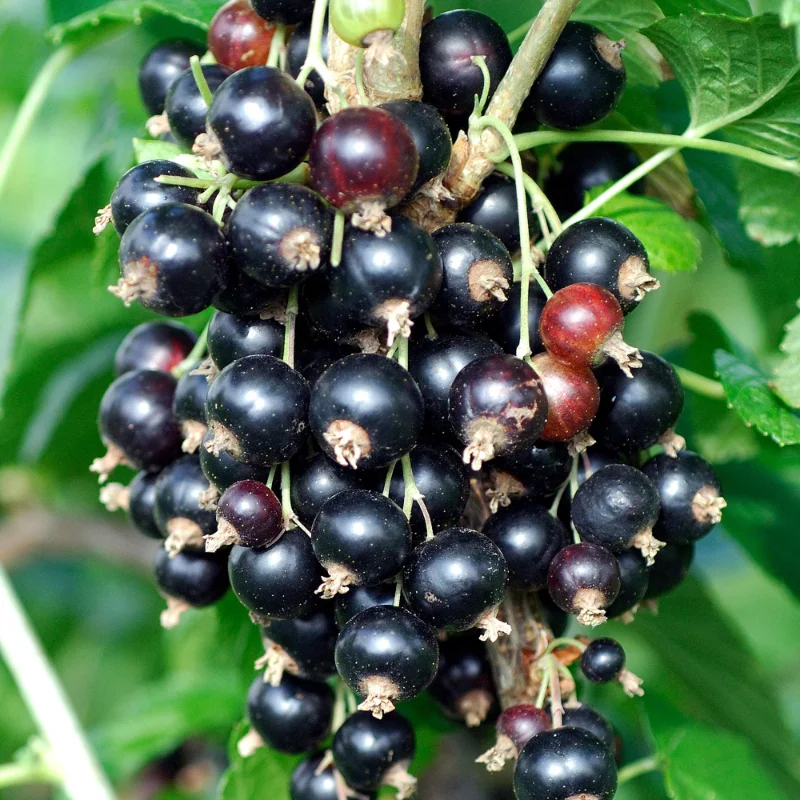
Titania black currant is a popular, vigorous, and highly productive shrub variety known for its large, juicy, flavourful berries and strong disease resistance, particularly to white pine blister rust and powdery mildew.
Developed in Sweden, it is a favourite for home gardens and commercial production in North America due to its hardiness and reliable yield.
Key Characteristics
- Fruit Traits: Produces large, jet-black, juicy berries with a rich, sweet-sour, and mildly musky flavour. The fruit is versatile and excellent for fresh eating, juices, jams, pies, and cordials, and is very rich in vitamin C and antioxidants.
- Harvest: It is a mid-season variety, with berries typically ripening from mid to late July. The fruit tends to ripen simultaneously, which is convenient for harvesting.
- Plant Size: A vigorous and upright shrub that reaches a mature height of approximately 1.5 to 1.8 meters (5 to 6 feet).
- Hardiness: Hardy, typically suited for Canadian Hardiness zones 3-7.
- Pollination: It is a self-fertile variety, meaning it will produce fruit without another black currant variety nearby.
However, planting a compatible variety nearby can significantly increase yields. - Disease Resistance: A key advantage of ‘Titania’ is its resistance to common black currant ailments, including white pine blister rust and powdery mildew.
Growing Tips
- Light Exposure: ‘Titania’ performs best in full sun (at least 6-8 hours of direct sunlight daily) but will tolerate partial or light shade.
- Soil Preference: It thrives in moist, well-drained, humus-rich soil (loam) with a slightly acidic to neutral pH (5.5-7.0).
- Watering: Requires consistent moisture, especially during the first couple of years after planting and during fruit development.
- Pruning: Pruning should be done annually in late winter or early spring to remove older canes and encourage new growth. Black currants produce the best fruit on one-year-old wood.

Reviews
There are no reviews yet.