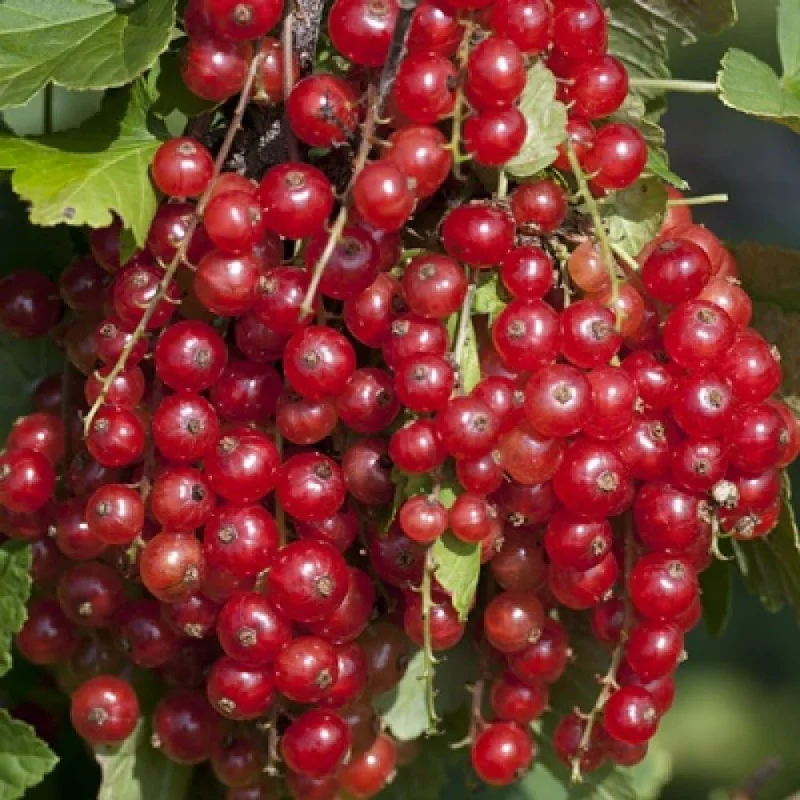
The Rovada red currant is a highly productive, cold-hardy shrub known for its exceptionally long clusters of large, tart, bright red berries.
Rovada is a top choice for jams, jellies, desserts, and fresh eating, prized for its reliable yields, late ripening, and resistance to powdery mildew and late frosts.
Key Characteristics
- Fruit: Long, drooping clusters (racemes) of glossy, translucent red berries, tart but flavorful.
- Yield: High-yielding with heavy, easy-to-pick crops.
- Ripening: Late-season (late July/early August), allowing it to escape early frosts and stay on the bush longer.
- Plant: Compact, deciduous shrub growing 3-5 feet tall, with aromatic leaves when crushed.
- Hardiness: Very cold-hardy (Zone 3), tolerates full sun to partial shade.
- Disease Resistance: Good resistance to powdery mildew and rust.
- Pollination: Self-fertile, meaning one plant can produce fruit.
Growing Tips - Sun Exposure: Prefers full sun but can tolerate partial shade, especially in hot summer regions.
- Soil: Thrives in organically rich, well-drained soil with an ideal pH of 6.2 to 6.5. Mulching is recommended to maintain soil moisture and suppress weeds.
- Watering: Requires consistent moisture, particularly when the fruits are forming, but avoid waterlogging the soil.
- Pruning: Main pruning should be done in the dormant season to establish a strong framework of canes of different ages (targeting 9-12 productive canes in a mature plant). Summer pruning of vigorous new growth (laterals) helps manage size and improves air circulation.
- Hardiness: It is a cold-tolerant and resilient plant, hardy in USDA zones 3 to 7.
Reviews
There are no reviews yet.